Most Melbourne homes with overhead power lines across the front don’t think about them until a painter arrives on day one and points at the wire running above the gutter. At that point, you’re looking at a permit process, a distributor lead time of two weeks or more, and a cost that was never in the original quote. The good news: when those requirements are identified upfront, they are straightforward to manage. When they are discovered after the job has started, they are expensive and disruptive.
Melbourne City Maintenance has been completing exterior repaints across Melbourne’s inner suburbs since 2005. We scope line clearance and permit requirements at quote stage so homeowners are not caught off guard. This is what the process actually involves — and how to tell whether your painter has covered it properly before you sign anything.
The short version
- Working near live overhead lines in Victoria is governed by the No Go Zone rules, enforced by Energy Safe Victoria. The minimum approach distances depend on the voltage of the line, not on how careful you are.
- If any part of the work — a ladder, a roller pole, a person — could enter that zone, the distributor must be involved. That means CitiPower, Powercor, Jemena, AusNet Services or United Energy depending on your address.
- The distributor’s usual options are a trained safety observer on site, insulating covers fitted over the line, or de-energising the line for the duration of the work. Each takes time and money to arrange.
- If the work spills onto the footpath or road — scaffold, a work zone, a skip — council issues a separate permit.
- You typically do not need any permit at all if the overhead line is at a safe distance from the work, or if the supply runs underground.
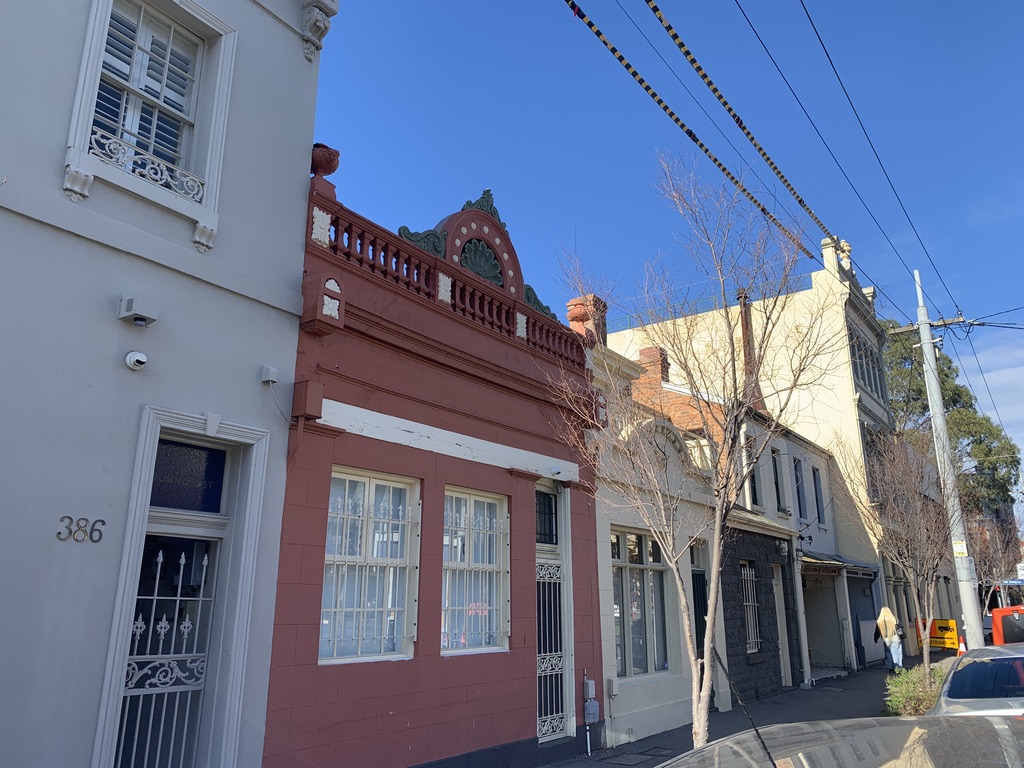
384 Drummond Street, Carlton. Overhead lines running across the frontage at roofline height: this is the scenario that triggers the distributor permit process before painting can start.
What counts as too close
Victoria’s No Go Zone framework sets a minimum approach distance around live overhead conductors. The distance scales with voltage, so a low-voltage service line to a single house and a high-voltage distribution line down the street have different rules. Energy Safe Victoria publishes the current distances.
The part people misjudge is what counts as approaching. It is not just your body. A metal ladder, an extension pole, scaffold tube, even a long-handled roller can enter the zone while you stay well outside it. The rule applies to the equipment as much as the person holding it.
Who issues what
Your electricity distributor. Handles anything involving the lines themselves — a safety observer, insulating line covers, or a temporary shutdown. Which company depends on your address, not on who you buy electricity from.
Your local council. Handles anything that occupies public land: scaffold on the footpath, a work zone on the road, a skip in the street. Requirements and fees vary between councils.
The contractor. Holds the licences and tickets for working at height and near lines, and is responsible for the traffic management plan if one is needed.
You, the owner. Usually nothing directly, but the permits are tied to your property and someone has to authorise the work. A contractor who arranges everything is doing it on your behalf.
Why there is no single answer
Two houses on the same street can have completely different requirements. A property with underground supply needs nothing. Its neighbour with a low-slung service line across the verandah may need a safety observer for the whole exterior. Nothing about the house tells you which — only the position and voltage of the line does.
Frontage matters too. A single-fronted terrace with no setback puts the work directly over the footpath, which brings the council in. The same job on a house set back behind a garden may not touch public land at all.
What a safety observer does
Worth knowing. A safety observer is not a supervisor and not an electrician. Their single job is to watch the work and stop it if anything approaches the line. They cannot do anything else while they are doing that, which is why they are charged as a separate person on site.
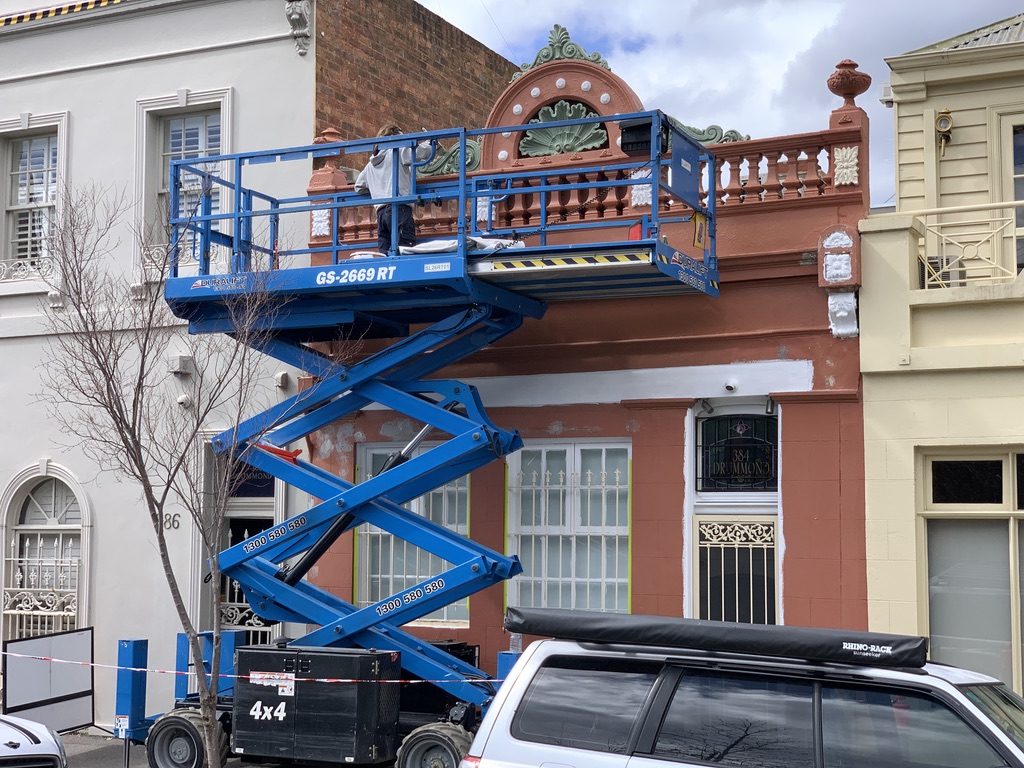
The GS-2669 RT scissor lift used on the Drummond Street job. At this height, equipment position relative to the overhead line determined whether a safety observer was required on site.
Four ways to reduce the cost
- Ask at quote stage, not at booking. A painter who identifies the requirement early can price it properly. One who finds it on day one has to stop and wait.
- Do the whole exterior at once. If a line measure is needed, the fixed cost of arranging it is the same whether you paint one elevation or four.
- Combine it with other exterior work. Gutters, fascia and window repairs share the same access and the same permits.
- Book outside peak season. Lead times for distributor arrangements stretch when everyone is painting.
Things people do not see coming
The lead time, not the fee. The frustrating part is rarely the cost. Two weeks is the minimum lead time for most distributor arrangements, and it means the work cannot start until that arrangement is confirmed. A job that seems ready to go can sit waiting for a fortnight before a brush touches the wall.
Weather delays get expensive. If a shutdown or observer is booked for specific days and Melbourne does what Melbourne does, rebooking is not always same-week.
Some quotes simply ignore it. A quote that does not mention lines on a property that clearly has them is not a cheaper quote. It is a different scope of work.
Insurance follows the rules. Work done inside the approach distance without the proper arrangement is work done outside the terms most policies are written on.
When to hand it over
Anything that involves the lines is not a homeowner job, and it is not really a judgement call. If a ladder or pole could reach the conductor, the arrangement has to be made through the distributor before the work starts.
Painting a rear elevation with no lines near it, at single-storey height, is ordinary exterior painting. The moment the front of the house and an overhead line are in the same picture, it becomes a job with a paperwork step in front of it.
Frequently asked questions about exterior painting permits in Melbourne
Do I always need a permit to paint the outside of my house?
No. If your power supply runs underground, or the overhead line is well clear of the work area, no permit is needed. The permit requirement is triggered by proximity to the overhead line, not by the painting itself.
How do I find out which electricity distributor covers my address?
In Melbourne it is one of five: CitiPower (inner suburbs), Powercor (western suburbs and regional Victoria), Jemena (northern suburbs), AusNet Services (eastern and outer areas), or United Energy (south-eastern suburbs and Mornington Peninsula). Your distributor depends on your street address, not your electricity retailer.
How long does it take to arrange a safety observer or line covers?
Allow a minimum of two weeks from first contact with the distributor. Schedules are tighter in spring and early summer when demand is high. A painter who identifies the requirement at quote stage can build that lead time into the job schedule so it does not delay the start.
Does council need to be involved if I am only painting the external walls?
Only if the work occupies public land — scaffold over the footpath, a materials skip, or a traffic management zone. If everything stays within your property boundary, council is not required.
Can Melbourne City Maintenance handle all the permit arrangements?
Yes. We assess line clearance and permit requirements before quoting, contact the relevant distributor and council if needed, and include any permit costs transparently in the job price. You deal with one company, not three separate organisations.
Is it safe to work near power lines without a safety observer?
Only if the work stays outside the No Go Zone distance for the line’s voltage. If there is any doubt, the safe and legal answer is to involve the distributor. Work done inside the approach distance without a proper arrangement is also outside the terms of most insurance policies.
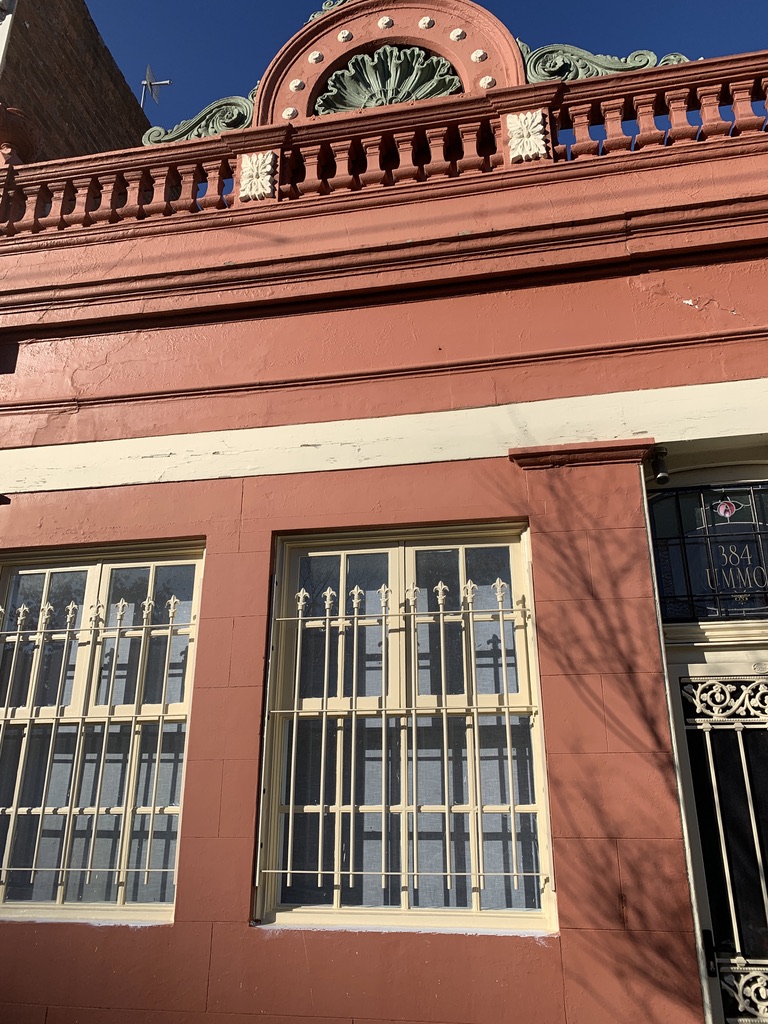
The result at 384 Drummond Street after all permits were in place and the work completed. The decorative parapet and window ironwork required careful masking and separate colour application.
Get a quote that includes the paperwork
Melbourne City Maintenance looks up the line position and voltage before quoting and arranges the permit process if it is needed. You get one price with the permits inside it, rather than a variation when the job is already under way.
We hold a current painting licence, $20 million public liability cover, and we follow up three months after every job to check the work is holding. Call Melbourne City Maintenance on 0403 162 374 or request a quote online.
This is general information about permits and safe working distances near overhead power lines in Victoria, not advice for a specific property. Approach distances, permit requirements, lead times and fees vary by line voltage, distributor and council. Energy Safe Victoria sets the No Go Zone rules and WorkSafe Victoria regulates the work itself. Confirm the requirements for your own address before any work begins.


 A friend found reviews of this company on a neighbourhood website so I included MCM in my list when I sought quotes for repairing and painting weatherboards on my house.